
What is Homeopathy?
Homeopathy is a complementary system of medicine founded over 200 years ago by the German physician Dr. Samuel Hahnemann. He observed that the body has an inherent ability to heal itself and developed a therapeutic approach based on how the body responds to certain substances.
Homeopathy is built on a few key ideas:
A historical foundation
In the late 1700s, Hahnemann noticed that taking certain substances in large amounts produced specific symptoms. When these same substances were given in extremely small, highly diluted forms, many individuals reported relief from similar symptoms. This observation became the guiding principle behind homeopathy.
Based on natural sources
Homeopathic remedies come from plant materials such as Arnica, Belladonna, and Chamomilla, minerals like Natrum Muriaticum and Sulphur, and various organic substances. These materials are prepared in a precise and structured way so they are gentle, accessible, and easy to use.
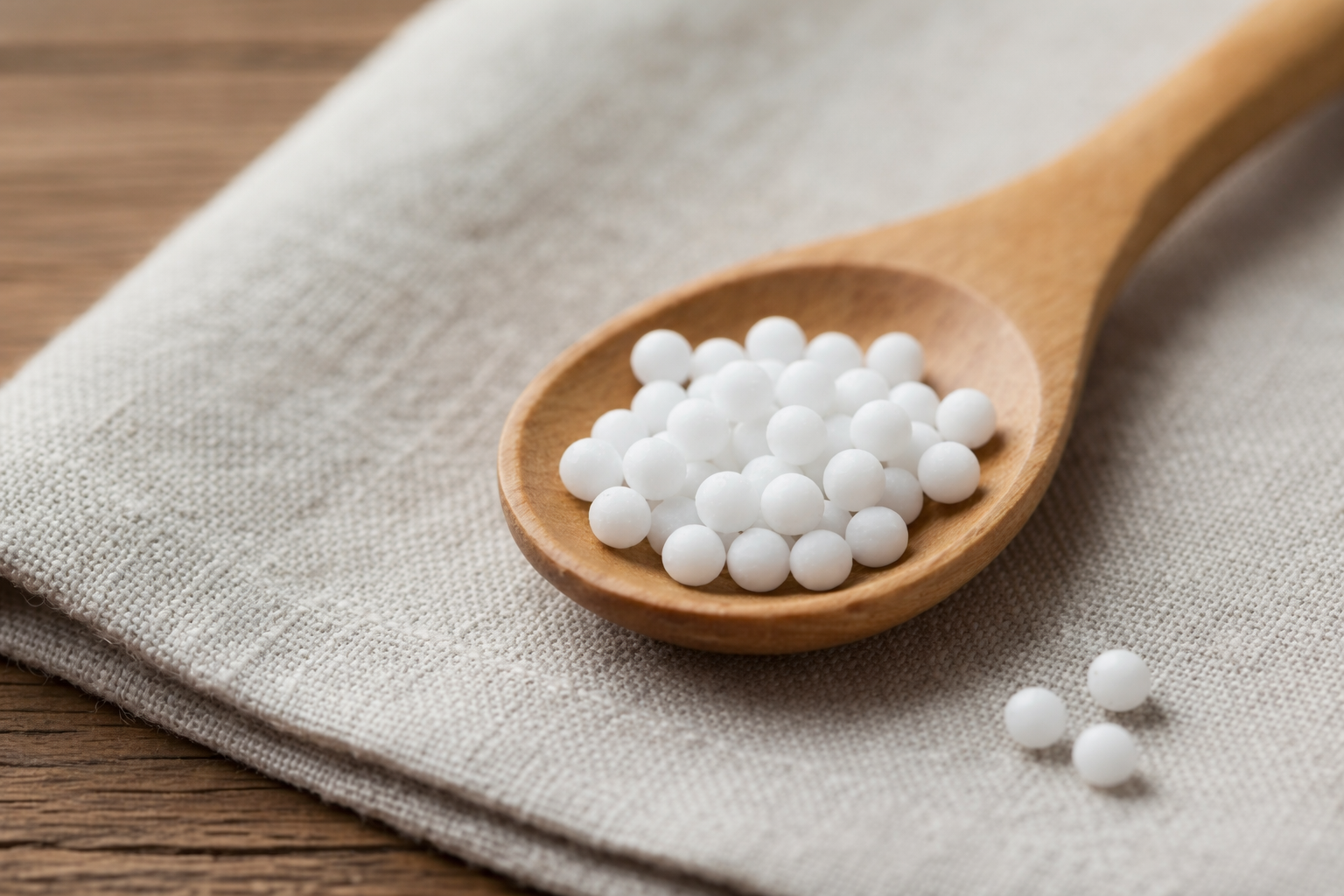
Potentization
Although remedies become highly diluted, homeopathic theory holds that this process enhances the energetic properties of the original substance, allowing the remedy to work effectively.

Used worldwide
Homeopathy is practiced in many parts of the world, including Europe, South Asia, South America, and the United States. Some people use it for common everyday concerns, while others take a more classical, individualized approach.
Non toxic and gentle
Because remedies are highly diluted, they are typically safe for a wide range of users, including children and older adults. However, individuals should use their own judgement and consult a healthcare professional when needed.